How to Use Free Ebooks as a Client Acquisition Tool for Your Business

Most people think getting clients starts with advertising or posting on social media every day. In reality, it often starts much earlier—before someone is even ready to buy. That’s where free ebooks quietly become one of the most effective tools in client acquisition.

A well-made ebook does something simple but powerful: it gives value first. Instead of asking for attention or a sale immediately, it earns trust by helping the reader solve a real problem. That shift alone changes how people see your business.

When someone learns something useful from you for free, they naturally start to see you as someone worth listening to. That’s the foundation of turning readers into clients.

How to Use Free Ebooks as a Client Acquisition Tool for Your Business

Why Free Ebooks Still Work in a Noisy Online World

We live in a time where attention is fragmented. People scroll quickly, skim content, and rarely slow down unless something feels relevant to them.

That’s exactly why ebooks still work.

Unlike short posts or ads, an ebook gives you space to explain something properly. It allows you to slow down the conversation and actually guide the reader through a problem and solution.

More importantly, it attracts people who are already looking for answers. If someone downloads your ebook, they’re not just casually browsing—they’re actively trying to improve something in their life or business.

That makes them a much stronger potential client.


Step 1: Pick a Topic That Matches a Real Client Problem

The success of your ebook starts with one decision: the topic.

If the topic is too broad, it gets ignored. If it’s too vague, it gets downloaded but never read. The most effective ebooks focus on one clear, painful, and specific problem.

Instead of trying to teach everything you know, focus on what your ideal client is struggling with right now.

Here are stronger examples:

  • How to get your first 10 paying clients without ads
  • A simple system to turn website visitors into inquiries
  • How small businesses can generate leads using free content
  • The fastest way to build trust with new customers online

Each of these speaks directly to a result someone wants, not just general information.


Step 2: Write the Ebook Like a Guided Conversation

A mistake many businesses make is writing ebooks that feel like textbooks. But your goal isn’t to impress—it’s to guide.

Think of your ebook as a conversation with someone who is stuck and looking for direction.

A strong structure usually looks like this:

Start with the problem

Show the reader you understand what they’re dealing with. This creates connection immediately.

Break down the solution into steps

Don’t overwhelm them. Keep it simple, practical, and easy to follow.

Add real-world context

Explain how this works in actual situations or business types.

Give them quick wins

Small actions they can apply right away build momentum and trust.

End with a natural direction forward

Not a hard pitch—just a logical next step if they want deeper help.


Step 3: Turn the Ebook Into a Lead Generator

An ebook only becomes a client acquisition tool when it’s connected to a system.

That system is usually very simple:

  1. A landing page offering the ebook for free
  2. A form where users enter their email
  3. Automatic delivery of the ebook

The key here is that you’re not just giving away information—you’re building an audience.

The landing page matters more than most people think. It should clearly answer three things:

  • What will I learn?
  • Who is this for?
  • What result will I get?

If those answers are clear, people will sign up.


Step 4: Build a Follow-Up Sequence That Builds Trust

After someone downloads your ebook, the real work begins.

This is where many businesses lose potential clients because they stop communication too early.

Instead, you should follow up with simple, helpful messages over a few days:

  • Day 1: Deliver the ebook and set expectations
  • Day 2: Share a related insight or mistake people make
  • Day 3: Provide a deeper tip or example
  • Day 4: Introduce your service naturally

The goal is not to push a sale immediately. It’s to stay present while continuing to provide value.

When done correctly, people start reaching out on their own.


Step 5: Use the Ebook Across Multiple Channels

A strong ebook should not sit in one place.

It should be part of your entire marketing system.

You can promote it through:

  • Blog posts related to the topic
  • Social media content snippets
  • YouTube videos explaining key points
  • Email newsletters
  • Website banners or pop-ups

Think of the ebook as your entry point. Everything else should point back to it.

The more visible it becomes, the more consistent your lead flow will be.


Step 6: Position Your Service as the Next Step

A well-designed ebook doesn’t just educate—it prepares people for what comes next.

By the time someone finishes your ebook, they should understand two things:

  1. You understand their problem
  2. There is a deeper solution if they want help implementing it

This is where your service naturally fits in.

For example:

  • The ebook explains how to generate leads
  • Your business helps set up or manage that system

When the connection is logical, it doesn’t feel like selling—it feels like progression.


Common Mistakes That Limit Results

Even a good ebook can fail if a few key mistakes are made:

Trying to cover too much

More content is not better. Clarity wins.

No clear audience

If it’s written for everyone, it connects with no one.

Weak distribution

A great ebook that nobody sees won’t generate clients.

No follow-up system

Most conversions happen after the download, not at the download itself.

source: Story Grid

Final Thoughts

Free ebooks work because they change the way people see your business before any sales conversation happens. Instead of chasing clients, you’re attracting them by helping first.

When you combine a focused topic, clear structure, and a simple follow-up system, your ebook becomes more than content—it becomes a steady client acquisition channel.

And once that system is in place, it doesn’t just generate leads occasionally. It continues working in the background, building trust and bringing in potential clients over time.

The written content on this page was generated by ChatGPT.
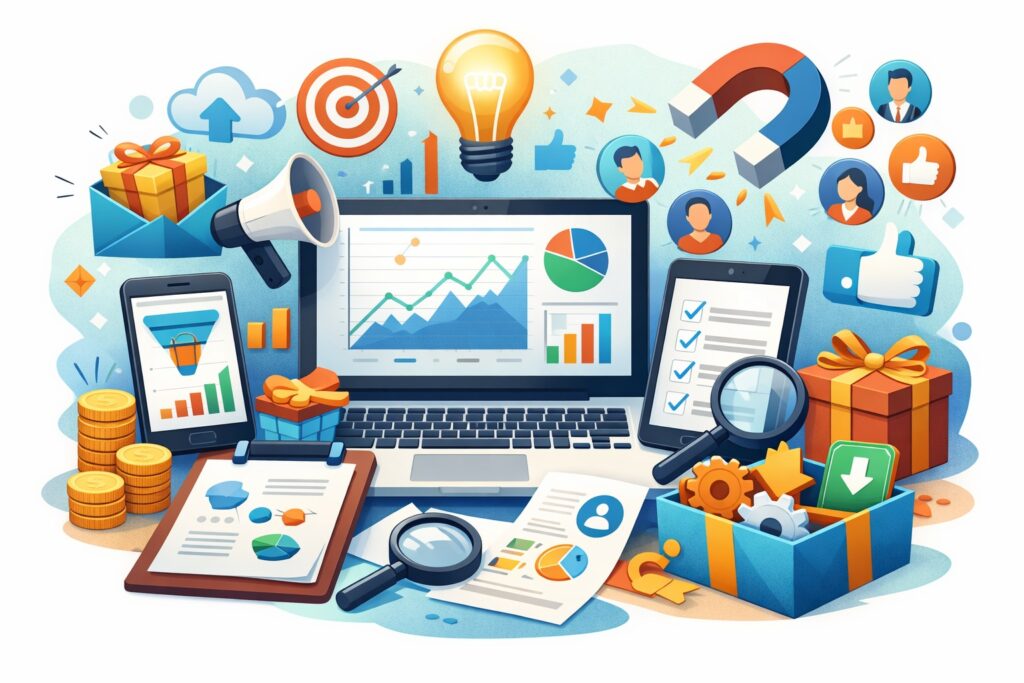
Top Analytics and Reporting Tools to Get Clients with Free Information and Free Products

In today’s competitive marketplace, attracting clients isn’t just about advertising or cold outreach—it’s about creating value. Businesses that offer free information, resources, or products strategically can not only capture attention but also build trust and long-term relationships. However, to maximize the effectiveness of this approach, analytics and reporting tools are crucial. They allow you to measure, refine, and optimize every step of your client acquisition journey.

This article dives deep into how businesses can leverage analytics and reporting tools to attract clients through free content and products, creating a system that consistently converts prospects into loyal customers.

Top Analytics and Reporting Tools to Get Clients with Free Information and Free Products

Why Free Information and Free Products Work

Giving away value upfront is a proven strategy for client acquisition. Offering free ebooks, guides, webinars, trials, templates, or product samples allows potential clients to experience your expertise firsthand without financial risk.

Here’s why this approach is effective:

  1. Builds Trust: Providing free information demonstrates expertise and reliability.
  2. Showcases Value: Potential clients can see the quality of your work before making a purchase decision.
  3. Generates Leads: Free offerings often require an email or contact information to access, creating a pool of qualified leads.
  4. Encourages Sharing: Valuable free resources are often shared, expanding your reach organically.

While the concept is simple, scaling this strategy effectively requires data-driven insights—that’s where analytics and reporting tools come in.


The Role of Analytics and Reporting Tools

Analytics and reporting tools help you track how potential clients interact with your free offerings. These tools reveal which pieces of content are engaging, which products generate interest, and which lead generation strategies convert best.

Key Benefits:

  • Understand Audience Behavior: Know who is engaging with your content, which pages they visit, and what actions they take.
  • Measure Conversion Rates: Track how many free resource users become paying clients.
  • Optimize Your Strategy: Identify top-performing content or products and replicate their success.
  • Improve ROI: Avoid wasted effort on low-performing strategies by focusing on what works.

Top Analytics and Reporting Tools to Use

Here are some tools that can help you measure and optimize your client acquisition efforts through free offerings:

1. Google Analytics

  • Track website traffic, user behavior, and conversion funnels.
  • Monitor which free resources are most downloaded and what pages lead to higher engagement.
  • Use data to improve landing pages and calls to action.

2. HubSpot Analytics

  • A powerful tool for tracking leads from free content to client conversion.
  • Offers in-depth reporting on email campaigns, forms, and social engagement.
  • Integrates seamlessly with HubSpot’s CRM for end-to-end tracking.

3. Hotjar

  • Visualize how visitors interact with your free offerings.
  • Heatmaps show where users click, scroll, or drop off.
  • Recordings allow you to see the user experience and optimize content accordingly.

4. Mixpanel

  • Tracks specific actions users take after accessing your free content or products.
  • Provides funnel analysis to understand where leads drop off in the conversion process.
  • Ideal for subscription-based or SaaS businesses offering free trials.

5. Mailchimp or ActiveCampaign Reporting

  • Analyze the performance of email campaigns promoting free resources.
  • Monitor open rates, click-through rates, and conversions.
  • Segment audiences to send targeted offers based on engagement.

6. Ahrefs or SEMrush

  • Identify which free content is driving organic traffic via search engines.
  • Monitor keywords, backlinks, and content performance.
  • Optimize content for maximum visibility and lead generation.

Strategies for Using Free Content and Products with Analytics

1. Create Lead Magnets

Offer high-value free content such as guides, templates, or tutorials in exchange for contact information. Use analytics to see which resources attract the most leads and adjust your offerings accordingly.

2. Offer Free Trials or Samples

Provide free access to your product or service for a limited time. Use reporting tools to track engagement, usage patterns, and follow-up conversion rates.

3. Segment Your Audience

Not all users are the same. Analytics tools can segment leads based on demographics, behavior, and interests. Tailor follow-up content and offers for each segment to improve conversion.

4. Track Engagement and Feedback

Measure how users interact with your free offerings. Surveys, downloads, email opens, and clicks can provide insights to improve the quality and relevance of your content.

5. Refine Your Funnel Continuously

Use analytics to identify bottlenecks in your acquisition funnel. If users access a free resource but don’t convert, investigate and optimize your messaging, CTA, or follow-up sequence.


Case Study Example

Imagine a small business offering free e-books about social media marketing. Using Google Analytics, they discover one e-book on Instagram strategies generates the highest download rate. They segment this audience in HubSpot, sending follow-up emails with a free webinar invitation. Hotjar reveals that visitors often abandon the sign-up page due to form length, prompting a redesign. Within weeks, these targeted improvements increase client conversion by 35%.

This is the power of combining free offerings with analytics: you identify what works, refine the approach, and scale it effectively.

source: Top Click Media

Conclusion

Offering free information and free products is a proven way to attract clients—but the real secret lies in measurement and optimization. Analytics and reporting tools provide the insights needed to understand your audience, track engagement, and improve conversion rates.

By strategically using these tools, businesses can not only give value upfront but also turn that value into loyal clients. The future of client acquisition is data-driven, and those who leverage analytics to refine their free content and product strategies will consistently stay ahead of the competition.

Supercharge your client acquisition by combining generosity with insight, and watch your business grow sustainably and strategically.

The written content on this page was generated by ChatGPT.