How to Use Free Ebooks as a Client Acquisition Tool for Your Business

Most people think getting clients starts with advertising or posting on social media every day. In reality, it often starts much earlier—before someone is even ready to buy. That’s where free ebooks quietly become one of the most effective tools in client acquisition.

A well-made ebook does something simple but powerful: it gives value first. Instead of asking for attention or a sale immediately, it earns trust by helping the reader solve a real problem. That shift alone changes how people see your business.

When someone learns something useful from you for free, they naturally start to see you as someone worth listening to. That’s the foundation of turning readers into clients.

How to Use Free Ebooks as a Client Acquisition Tool for Your Business

Why Free Ebooks Still Work in a Noisy Online World

We live in a time where attention is fragmented. People scroll quickly, skim content, and rarely slow down unless something feels relevant to them.

That’s exactly why ebooks still work.

Unlike short posts or ads, an ebook gives you space to explain something properly. It allows you to slow down the conversation and actually guide the reader through a problem and solution.

More importantly, it attracts people who are already looking for answers. If someone downloads your ebook, they’re not just casually browsing—they’re actively trying to improve something in their life or business.

That makes them a much stronger potential client.


Step 1: Pick a Topic That Matches a Real Client Problem

The success of your ebook starts with one decision: the topic.

If the topic is too broad, it gets ignored. If it’s too vague, it gets downloaded but never read. The most effective ebooks focus on one clear, painful, and specific problem.

Instead of trying to teach everything you know, focus on what your ideal client is struggling with right now.

Here are stronger examples:

  • How to get your first 10 paying clients without ads
  • A simple system to turn website visitors into inquiries
  • How small businesses can generate leads using free content
  • The fastest way to build trust with new customers online

Each of these speaks directly to a result someone wants, not just general information.


Step 2: Write the Ebook Like a Guided Conversation

A mistake many businesses make is writing ebooks that feel like textbooks. But your goal isn’t to impress—it’s to guide.

Think of your ebook as a conversation with someone who is stuck and looking for direction.

A strong structure usually looks like this:

Start with the problem

Show the reader you understand what they’re dealing with. This creates connection immediately.

Break down the solution into steps

Don’t overwhelm them. Keep it simple, practical, and easy to follow.

Add real-world context

Explain how this works in actual situations or business types.

Give them quick wins

Small actions they can apply right away build momentum and trust.

End with a natural direction forward

Not a hard pitch—just a logical next step if they want deeper help.


Step 3: Turn the Ebook Into a Lead Generator

An ebook only becomes a client acquisition tool when it’s connected to a system.

That system is usually very simple:

  1. A landing page offering the ebook for free
  2. A form where users enter their email
  3. Automatic delivery of the ebook

The key here is that you’re not just giving away information—you’re building an audience.

The landing page matters more than most people think. It should clearly answer three things:

  • What will I learn?
  • Who is this for?
  • What result will I get?

If those answers are clear, people will sign up.


Step 4: Build a Follow-Up Sequence That Builds Trust

After someone downloads your ebook, the real work begins.

This is where many businesses lose potential clients because they stop communication too early.

Instead, you should follow up with simple, helpful messages over a few days:

  • Day 1: Deliver the ebook and set expectations
  • Day 2: Share a related insight or mistake people make
  • Day 3: Provide a deeper tip or example
  • Day 4: Introduce your service naturally

The goal is not to push a sale immediately. It’s to stay present while continuing to provide value.

When done correctly, people start reaching out on their own.


Step 5: Use the Ebook Across Multiple Channels

A strong ebook should not sit in one place.

It should be part of your entire marketing system.

You can promote it through:

  • Blog posts related to the topic
  • Social media content snippets
  • YouTube videos explaining key points
  • Email newsletters
  • Website banners or pop-ups

Think of the ebook as your entry point. Everything else should point back to it.

The more visible it becomes, the more consistent your lead flow will be.


Step 6: Position Your Service as the Next Step

A well-designed ebook doesn’t just educate—it prepares people for what comes next.

By the time someone finishes your ebook, they should understand two things:

  1. You understand their problem
  2. There is a deeper solution if they want help implementing it

This is where your service naturally fits in.

For example:

  • The ebook explains how to generate leads
  • Your business helps set up or manage that system

When the connection is logical, it doesn’t feel like selling—it feels like progression.


Common Mistakes That Limit Results

Even a good ebook can fail if a few key mistakes are made:

Trying to cover too much

More content is not better. Clarity wins.

No clear audience

If it’s written for everyone, it connects with no one.

Weak distribution

A great ebook that nobody sees won’t generate clients.

No follow-up system

Most conversions happen after the download, not at the download itself.

source: Story Grid

Final Thoughts

Free ebooks work because they change the way people see your business before any sales conversation happens. Instead of chasing clients, you’re attracting them by helping first.

When you combine a focused topic, clear structure, and a simple follow-up system, your ebook becomes more than content—it becomes a steady client acquisition channel.

And once that system is in place, it doesn’t just generate leads occasionally. It continues working in the background, building trust and bringing in potential clients over time.

The written content on this page was generated by ChatGPT.
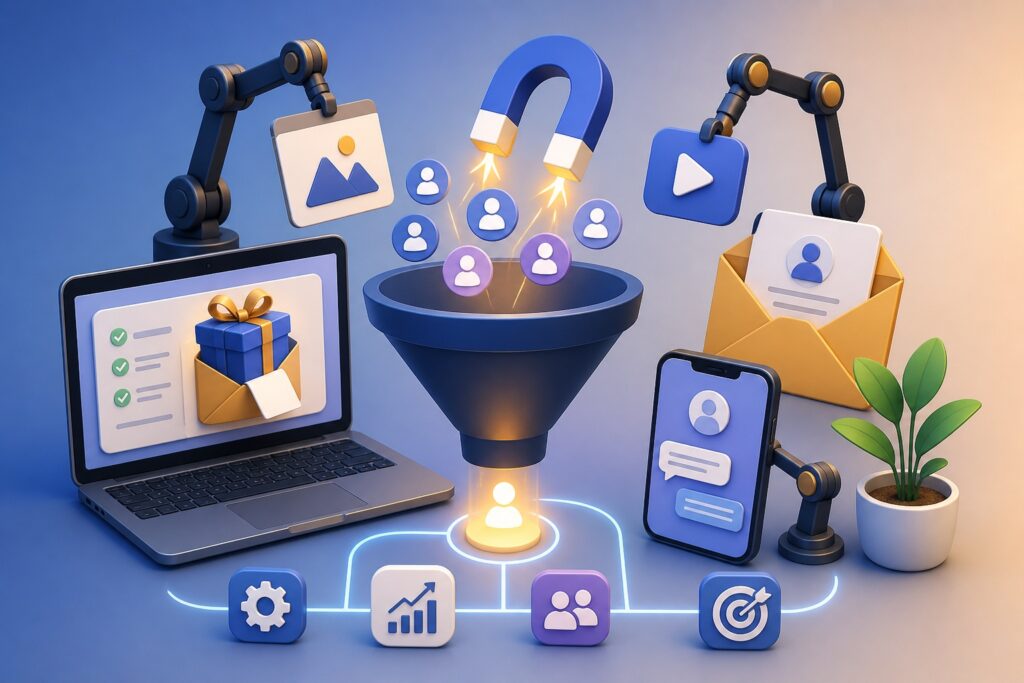
Best Digital Tools to Automate Client Acquisition with Free Content Offers

Why Free Content Has Become the New Client Magnet

If you look at how businesses are winning clients today, one pattern shows up everywhere: they are giving away value before asking for anything in return.

Instead of pushing sales messages right away, they offer something useful for free—an ebook, a checklist, a webinar, or even a simple template. That small exchange opens the door to something much bigger: trust.

But here’s where most businesses struggle. Creating free content is easy. Turning that content into paying clients is where things usually fall apart.

That’s exactly where automation tools come in. When set up properly, they take a simple free offer and turn it into a structured system that attracts leads, nurtures them, and converts them into clients without constant manual effort.

Best Digital Tools to Automate Client Acquisition with Free Content Offers
image generated by ChatGPT

1. Email Marketing Tools That Do the Heavy Lifting

Once someone downloads your free resource, the real process begins. Email is where relationships are built.

Instead of sending random messages, email marketing tools allow you to create structured journeys that guide people step by step from curiosity to conversion.

Some of the most reliable platforms include:

  • Mailchimp
  • ConvertKit
  • ActiveCampaign

What makes them powerful is automation. You can set up a sequence once, and it continues working in the background.

For example, a new subscriber who downloads your free guide might automatically receive:

  • A welcome message explaining what to expect
  • A follow-up email with additional tips
  • A case study showing real results
  • A final message inviting them to book a call or try your service

It feels personal to the user, but it’s completely automated on your end.


2. Landing Page Builders That Turn Interest into Action

A free offer is only effective if people actually sign up for it. That’s where landing pages come in.

Unlike a regular website page, a landing page has one job: get the visitor to take action.

Tools that help you build high-converting pages include:

  • ClickFunnels
  • Leadpages
  • Unbounce

A strong landing page removes distractions and focuses entirely on your free offer. No menus, no extra links—just a clear explanation of the value and a simple signup form.

The difference in conversion rates between a homepage and a dedicated landing page can be dramatic.


3. CRM Systems That Organize Every Lead Automatically

As your free content starts bringing in leads, things can quickly become messy without a system to manage them.

That’s where CRM tools come in. They store, track, and organize every interaction a potential client has with your business.

Popular options include:

  • HubSpot CRM
  • Zoho CRM
  • Pipedrive

A CRM helps you understand who is just browsing and who is actually close to buying.

For instance, if someone downloads multiple free resources, opens your emails, and visits your pricing page, the system can flag them as a high-quality lead. That allows you to follow up at the right time instead of guessing.


4. Funnel Builders That Connect Everything Together

Think of a funnel as the full path your client takes—from discovering your free content to becoming a paying customer.

Without structure, leads get lost. With a funnel, everything flows in a controlled sequence.

Tools that help build this system include:

  • Systeme.io
  • Kartra
  • ClickFunnels

A typical funnel might look like this:

Free ebook → Email sequence → Webinar or case study → Offer page → Client conversion

Once it’s built, it runs continuously in the background, bringing in and converting leads around the clock.


5. Social Scheduling Tools That Keep Your Free Content Visible

Even the best free offer won’t work if nobody sees it. Consistent visibility is what keeps your funnel filled.

Social media scheduling tools make this much easier by allowing you to plan content ahead of time and publish it automatically.

Common tools include:

  • Buffer
  • Hootsuite
  • Later

These platforms help you:

  • Promote your free resources regularly
  • Stay active without posting manually every day
  • Repurpose content across multiple channels
  • Maintain steady traffic into your funnel

Consistency is what keeps client flow predictable.


6. Webinar Platforms That Build Trust Fast

Webinars are one of the most effective free offers you can create.

They allow you to teach, demonstrate, and connect with potential clients in real time, which builds trust much faster than written content alone.

Useful platforms include:

  • Zoom
  • WebinarJam
  • Demio

A well-run webinar usually follows a simple pattern:

  1. Teach something valuable
  2. Show real-world examples or results
  3. Introduce your service as the next step

When paired with automation, webinars can become one of your strongest client acquisition tools.


7. Analytics Tools That Show What’s Actually Working

At some point, guessing stops being useful. You need data to understand which free offers are actually bringing in clients.

Analytics tools help you see what’s working and what isn’t.

Common choices include:

  • Google Analytics
  • Hotjar
  • Mixpanel

These tools help you track:

  • Which free resources generate the most signups
  • Where users drop off in your funnel
  • Which traffic sources bring paying clients
  • How your email sequences perform over time

Once you understand the data, you can refine your system and improve results without increasing effort.

source: Adam Erhart

Final Thoughts: Turning Free Value into a System That Sells for You

The real advantage of using free content offers is not just attracting attention—it’s building a predictable system for client acquisition.

When you connect the right tools together, something powerful happens:

  • Free content brings people in
  • Landing pages capture their interest
  • Email systems build trust
  • Funnels guide their journey
  • CRMs and analytics optimize everything

Eventually, your business stops relying on constant outreach. Instead, it runs like a structured engine that brings in leads and converts them consistently.

That’s the real power of automation—not replacing human connection, but scaling it.

The written content on this page was generated by ChatGPT.

Nurturing Client Bonds: How Free Information and Products Create Long-Term Partnerships

In the fast-paced world of business, where transactions often occur at lightning speed and customer relationships are increasingly transactional, the idea of nurturing long-term client bonds might seem like a quaint relic of a bygone era. However, the truth remains that cultivating lasting partnerships with your clients is not only possible but also highly beneficial. In this article, we will explore a powerful strategy for achieving this: providing free information and products.

The Essence of Long-Term Partnerships

Before we dive into the practical aspects of nurturing client bonds, it’s essential to understand why building long-term relationships is vital for your business. Long-term clients are more than just repeat buyers; they become brand advocates, refer new businesses, and provide a stable revenue stream.

A long-term client is someone who trusts your brand implicitly, relies on your products or services, and feels a genuine connection with your company. Achieving this level of commitment involves more than merely providing a product or service; it requires fostering a sense of loyalty and partnership.

The Power of Free

One of the most effective tools for cultivating these lasting partnerships is the strategic use of free information and products. But why “free”?

The answer lies in the psychological principle of reciprocity. When you offer something of value without expecting an immediate return, you trigger a sense of obligation in the recipient. People tend to reciprocate kindness, and this principle is the foundation of how freebies can forge strong connections with your clients.

Providing Free Information

Free information can take many forms – blogs, e-books, webinars, podcasts, and more. The key is to offer content that’s genuinely valuable and relevant to your audience. Here’s how it helps in nurturing client bonds:

  1. Building Trust: When you consistently provide free, valuable information, you position your brand as an authority in your field. Trust grows as clients come to rely on your insights.
  2. Educating Your Clients: Free information helps clients understand your products or services better. When clients are well-informed, they are more likely to make informed decisions.
  3. Engagement: Regularly sharing free information keeps your clients engaged with your brand. It keeps your business in their minds even when they’re not actively purchasing.
  4. Problem Solving: Offering solutions to common problems or challenges faced by your clients showcases your commitment to their success.

The Impact of Free Products

Free products can be equally impactful in nurturing long-term partnerships. These can be templates, e-books, sample products, or any tangible item with perceived value. Here’s why they matter:

  1. Demonstrating Quality: Free products give clients a taste of the quality they can expect from your paid offerings.
  2. Creating Reciprocity: When you provide a valuable free product, clients are more likely to choose your brand when making a purchase in the future.
  3. Strengthening Brand Recall: A physical product with your logo or branding can sit on your client’s desk or shelf, serving as a constant reminder of your business.
  4. Personalization: Offering tailored free products can show that you genuinely understand your clients’ needs and preferences.

The Strategy: A Holistic Approach

To maximize the impact of free information and products in nurturing client bonds, consider these strategic steps:

  1. Understand Your Audience: Know your clients’ pain points, interests, and needs. Tailor your free offerings accordingly.
  2. Consistency: Regularly provide free content and products to maintain client engagement.
  3. Opt-In and Value Exchange: Use opt-in forms and gated content to collect client information in exchange for valuable freebies.
  4. Personalization: Whenever possible, personalize your free offerings to make clients feel special.
  5. Feedback Loop: Encourage clients to provide feedback on your free content and products. Use this information to continually improve.
  6. Clear Call to Action (CTA): In your free content, include a clear CTA that guides clients towards further engagement with your brand.
  7. Long-Term Thinking: Remember that nurturing client bonds is a long-term strategy. Be patient, and focus on building trust and delivering consistent value.
source: youtube.com/@crashcourse

In a world where loyalty can be fickle, the timeless principles of building long-term client partnerships still hold true. By leveraging the psychology of reciprocity through free information and products, you can create a bond with your clients that goes beyond mere transactions. This bond is the foundation of brand loyalty, advocacy, and sustainable business growth. So, embrace the power of “free” and start nurturing those client bonds today.

Captivating Audiences: Free Products as a Tool for Brand Differentiation

In the bustling world of business, where competition is fierce and attention spans are fleeting, the art of capturing an audience’s interest is nothing short of a superpower. As a business owner or marketer, you’re not just selling products or services; you’re selling an experience, a connection, and a story that sets you apart from the crowd. This is where the magic of free products comes into play as an invaluable tool for brand differentiation.

The Symphony of Differentiation

Picture the market as a symphony, with each business playing its unique notes. Amidst the harmonious blend of these melodies, how can you ensure that your tune stands out? The answer lies in offering something extraordinary. Free products, when executed thoughtfully, are the crescendo that makes your brand’s symphony rise above the rest.

The Power of Reciprocity

One of the driving forces behind the effectiveness of free products as a brand differentiation strategy is the psychological principle of reciprocity. When you give, you trigger a sense of indebtedness in your audience. By providing something valuable at no cost, you initiate a cycle of goodwill that naturally encourages your audience to engage more deeply with your brand.

Imagine a software company offering a free, limited version of their premium software. Users download it, experience its benefits, and become familiar with the brand. When they need more advanced features, they’re more likely to choose the paid version from a brand they’re already comfortable with. This is reciprocity at play.

Beyond Transactions: Crafting Experiences

In the age of experiential marketing, the story you tell is just as important as the product you sell. Free products provide a canvas for you to paint your brand’s narrative. Every free e-book, template, or trial version of your software is an opportunity to showcase your brand’s ethos, values, and expertise.

Consider a cosmetic brand sharing tutorials and beauty guides for free. This not only empowers their audience but also positions them as industry leaders who genuinely care about their customers’ well-being. It’s not just about the product; it’s about the experience you provide.

Creating Value: The Heart of Free Offerings

The success of free products as a brand differentiation tool hinges on the value you provide. It’s not about hastily thrown-together resources; it’s about offering something genuinely useful. A free product should evoke the same feeling of delight as unwrapping a long-awaited gift. This is where the impact lies.

Think about a fitness brand offering a free workout plan that delivers visible results. The value of this free product isn’t just in the exercises but in the positive change it brings about in people’s lives. This, in turn, solidifies the brand’s position as a credible fitness authority.

Building a Tribe: Fostering Loyalty

The relationship between a brand and its audience isn’t just transactional; it’s emotional. Free products create a sense of belonging, transforming one-time customers into a loyal tribe. When you consistently deliver value, your audience starts to see you as a partner in their journey, not just a seller.

Imagine a photography brand offering free Lightroom presets. As photographers enhance their images using these presets, a sense of gratitude and connection develops. When they require more advanced tools or training, the brand they trust becomes their first choice.

The Ripple Effect

The beauty of free products as a brand differentiation strategy is that it triggers a ripple effect. Satisfied users turn into brand advocates. Word-of-mouth spreads like wildfire. Social media shares amplify your reach. What starts as a single free product resonates through the hearts of your audience and beyond.

Consider a culinary brand sharing free recipe cards. As people enjoy delectable meals prepared with these recipes, conversations around their dinner tables naturally lead to discussions about the brand that made it possible.

source: youtube.com/@PhilipVanDusen

In a world where competition is relentless, and consumer choices seem infinite, captivating audiences isn’t just about sales tactics; it’s about building relationships. Free products, when strategically implemented, are a bridge to the hearts of your audience. They allow you to showcase your value, tell your story, and create an experience that sets you apart. Through the magic of reciprocity, you not only gain attention but also build loyalty and trust. So, dare to be different. Craft free products that resonate, inspire, and leave an indelible mark on the symphony of the market.

Breaking Through Doubt: How Free Information and Products Overcome Skepticism

In today’s world, skepticism runs deep. The rise of digital marketing and the abundance of information have made consumers more cautious than ever. With scams, misleading advertisements, and false promises lurking around every corner of the internet, it’s no wonder that people approach new offerings with a healthy dose of doubt. So, how can businesses navigate this sea of skepticism and build genuine relationships with potential clients? The answer might lie in a seemingly counterintuitive approach: giving away free information and products.

The Age of Skepticism

Before delving into how free information and products can combat skepticism, it’s important to understand why skepticism has become such a prevalent mindset. The digital age has democratized information, enabling consumers to research, compare, and scrutinize products or services before making a purchase decision. The result? An audience that’s more informed, more discerning, and more hesitant to trust.

The Paradox of Giving

In a landscape where trust is the new currency, businesses are discovering that giving can be more powerful than taking. Offering valuable information and products without an immediate expectation of profit creates a paradox. By giving away something for free, you initiate a psychological response known as the reciprocity principle. This principle dictates that when people receive something beneficial without apparent strings attached, they feel compelled to give back.

Gaining Trust through Generosity

Imagine stumbling upon a website that offers a comprehensive e-book related to your industry for free. Your first thought might be, “What’s the catch?” But as you delve into the e-book, you realize it’s packed with genuinely useful insights. Suddenly, your skepticism softens. You feel a sense of gratitude and curiosity about the company behind this generous gesture.

This scenario illustrates the power of free information in breaking through doubt. By providing valuable content that addresses pain points, educates, or entertains, businesses establish themselves as authorities in their field. They prove that they aren’t just after a quick sale; they genuinely care about helping their audience.

Transforming Doubt into Engagement

Free products, such as templates, checklists, or software trials, also play a crucial role in overcoming skepticism. These offerings allow potential clients to experience the quality and value a business provides firsthand. When someone tries out a free product and finds it beneficial, their skepticism gradually transforms into engagement.

The Path to Conversion

Breaking through doubt is not the final goal – it’s a step towards conversion. The real challenge lies in guiding these engaged individuals further along the customer journey. The key is to nurture these relationships. Once you’ve gained a potential client’s trust through free offerings, it’s essential to maintain that trust through consistent communication, personalized content, and genuine interactions.

Case in Point: Success Stories

Countless businesses have successfully used free information and products to break through doubt and gain loyal clients. Consider the skincare industry. Instead of bombarding consumers with promises of miracle results, some skincare brands offer free skin assessments or personalized routines. These freebies not only provide immediate value but also establish a connection based on trust.

Skepticism is a natural defense mechanism in a world full of choices. However, businesses can overcome this skepticism by embracing the power of giving. Offering free information and products is not just about attracting attention; it’s about building relationships based on trust and value.

source: youtube.com/@citruslabs1849

In the age of skepticism, being transparent, empathetic, and genuinely helpful goes a long way. By understanding the psychology behind skepticism and leveraging the reciprocity principle, businesses can break down barriers, engage their audience, and ultimately, turn skeptics into loyal clients. So, embrace the paradox: give freely to gain the trust that can propel your business to new heights.

Maximizing Impact: How Free Information Elevates Your Authority

In the digital era, where information is abundant and competition is fierce, establishing oneself as an authority in any field is crucial for success. Building authority goes beyond merely promoting products or services; it involves nurturing a relationship of trust and credibility with your audience. One powerful and effective way to achieve this is through the strategic use of free information. In this article, we will explore how providing valuable free content can elevate your authority and maximize your impact in the marketplace.

Establishing Trust through Generosity

One of the fundamental reasons why free information elevates your authority is that it helps establish trust with your audience. When you selflessly share valuable knowledge without any immediate expectation of return, you position yourself as a trustworthy source. By offering insights, tips, and solutions, you showcase your expertise and genuine interest in helping others. This act of generosity lays the foundation for building a loyal and engaged following.

Demonstrating Expertise and Knowledge

Free information serves as a showcase of your expertise and knowledge in your field. It gives you the opportunity to share your unique perspective, ideas, and insights with your audience. Whether it’s through blog posts, video tutorials, webinars, or downloadable resources, each piece of free content becomes a platform to demonstrate your competence and thought leadership. As your audience recognizes your valuable contributions, your authority in the industry naturally grows.

Creating a Strong Brand Identity

Consistently providing free information enables you to define your brand identity. Your approach to delivering information, the tone of your content, and the topics you cover all contribute to shaping your brand’s image. An authoritative brand identity attracts like-minded individuals who resonate with your message and values, fostering a sense of community around your expertise.

Building a Responsive Community

By giving away valuable content, you can attract a responsive and engaged community. People are more likely to engage with your brand when they see the tangible benefits of the information you offer. This active engagement can manifest in the form of comments, shares, and discussions around your content, further establishing your authority in the eyes of your audience and beyond.

Expanding Your Reach and Visibility

Free information acts as a gateway to introduce your brand to a broader audience. Valuable content is more likely to be shared, liked, and recommended, which can lead to increased visibility and exposure. As more people encounter your expertise, your authority begins to extend beyond your existing network, helping you reach new potential clients and customers.

Fostering Customer Loyalty and Repeat Business

Elevating your authority through free information not only attracts new prospects but also fosters customer loyalty. When individuals benefit from your insights and solutions, they are more likely to trust your products or services when the time comes to make a purchase. Satisfied clients can turn into repeat customers and brand advocates, further amplifying your authority through word-of-mouth recommendations.

Differentiating Yourself from Competitors

In crowded markets, where competitors vie for attention, offering free information sets you apart from the rest. Providing valuable insights without immediate cost creates a positive impression and sets the tone for a positive customer experience. This differentiation gives you a competitive edge and can be the deciding factor that convinces potential clients to choose your brand over others.

source: youtube.com/@23Ambition

The power of free information in elevating your authority cannot be underestimated. By generously sharing your expertise, you build trust, demonstrate your knowledge, and create a strong brand identity. The impact of free content extends beyond immediate client acquisition, as it fosters customer loyalty and helps you stand out in a crowded marketplace.

Remember that the key to maximizing impact is to provide content that genuinely adds value to your audience’s lives. Embrace your role as an authority figure, and use free information as a tool to connect, inspire, and empower others. As your authority grows, so will the opportunities to create a positive and lasting impact on your audience and industry as a whole.

The Reciprocity Principle: How Giving Freely Can Grow Your Business

In the fast-paced and competitive world of business, companies are constantly seeking innovative ways to attract and retain clients. One such powerful approach that has stood the test of time is the Reciprocity Principle. As the saying goes, “Give, and you shall receive,” and this principle holds true in the realm of business as well. By offering value and giving freely to potential clients, businesses can create a lasting impact that not only fosters trust but also fuels exponential growth.

Understanding the Reciprocity Principle

The Reciprocity Principle, a fundamental aspect of human psychology, dictates that people feel compelled to return a favor or act of kindness when someone has done something beneficial for them. This social norm is deeply ingrained in human behavior and has a profound impact on decision-making processes. In the context of business, this principle is harnessed to foster a positive perception of a brand or company and to build strong relationships with clients.

Going Beyond Traditional Marketing

Traditional marketing tactics often involve one-way communication, where businesses focus solely on promoting their products or services to potential clients. However, the Reciprocity Principle introduces a paradigm shift, emphasizing a more interactive and mutually beneficial approach. Instead of simply pushing their offerings, businesses leverage the principle by giving freely in the form of valuable information, resources, or even complimentary products.

The Art of Giving

Giving freely does not mean giving away everything for nothing. Instead, it involves providing genuinely useful and valuable content that addresses the needs and pain points of the target audience. For instance, a digital marketing agency might create a comprehensive e-book on “Top Strategies to Boost Online Presence,” while a skincare brand could offer a sample-sized product bundle to introduce potential customers to their range. The key is to demonstrate expertise and build trust through generosity.

Creating a Win-Win Scenario

At first glance, giving freely may seem counterintuitive to business growth, as it involves providing resources without an immediate expectation of profit. However, the true power lies in creating a win-win scenario. When businesses offer valuable information or products without directly asking for anything in return, potential clients perceive it as a genuine gesture of goodwill. This evokes a sense of indebtedness and reciprocity, increasing the likelihood of them becoming paying customers in the future.

Building Trust and Credibility

Trust is the foundation of any successful business-client relationship. By giving freely, businesses demonstrate transparency, reliability, and a genuine commitment to helping their audience. This fosters a positive perception of the brand and establishes credibility. Clients are more likely to trust a business that has already proven its worth through the value it provides without any strings attached.

Generating Leads and Nurturing Relationships

One of the primary benefits of the Reciprocity Principle in business is lead generation. By offering free resources, businesses attract potential clients who are genuinely interested in their niche or offerings. These leads can then be nurtured through various means, such as personalized email campaigns, exclusive content access, or invitation-only events. By consistently providing value and maintaining engagement, businesses can convert leads into loyal, long-term clients.

Brand Loyalty and Word-of-Mouth Marketing

The Reciprocity Principle also plays a significant role in fostering brand loyalty and encouraging word-of-mouth marketing. Clients who have experienced the benefits of a business’s free offerings are more likely to become advocates and refer the brand to their friends, family, and social circles. Positive word-of-mouth recommendations carry immense value, as they come from trusted sources and can lead to a chain reaction of new clients.

Long-Term Growth and Sustainability

While the immediate impact of giving freely might not be quantifiable in immediate revenue, the long-term effects are invaluable. Businesses that embrace the Reciprocity Principle often experience sustainable growth and a solid customer base. Client relationships built on trust and mutual benefit tend to be more enduring, fostering repeat business and customer loyalty.

source: youtube.com/@AgoCluytens

The Reciprocity Principle presents a compelling case for businesses to embrace a more giving and value-driven approach. By understanding the psychology behind reciprocity and leveraging it effectively, businesses can sow the seeds of trust and cultivate a loyal client base. Giving freely is not just an act of generosity; it is a strategic investment that paves the way for meaningful, sustainable, and rewarding growth in the competitive world of business. As you consider your business strategy, remember the age-old adage: Give, and you shall receive.

The Conversion-Boosting Magic of Freebies and Valuable Information

In the world of digital marketing and e-commerce, the pursuit of higher conversion rates is an ongoing journey for businesses of all sizes. While there are numerous tactics and strategies to explore, one approach that has proven to work wonders is the use of freebies and valuable information. In this article, we’ll delve into the conversion-boosting magic of freebies and valuable information, exploring how these powerful tools can elevate your business and turn casual visitors into loyal customers.

Understanding the Allure of Freebies

It’s no secret that people love free things. Offering freebies creates a sense of excitement and curiosity among potential customers. Whether it’s a free e-book, a sample product, or a limited-time trial, the allure of something offered at no cost is hard to resist. Freebies act as effective lead magnets, attracting prospects to your brand like a magnet, and opening the door to a deeper engagement with your offerings.

The Role of Valuable Information

In today’s information-driven age, knowledge is power. Providing valuable information to your target audience positions your brand as an authority in your industry. This could be in the form of educational blog posts, insightful webinars, or expert-guided video tutorials. When people find valuable information that helps them solve problems or improve their lives, they naturally gravitate towards the source of that knowledge, building trust and credibility with your brand.

The Synergy of Freebies and Valuable Information

When you combine the power of freebies with valuable information, you create a synergy that supercharges your conversion rates. Here’s how it works:

  1. Building Initial Interest: Freebies pique the interest of potential customers, encouraging them to explore what your brand has to offer. Whether it’s a free trial of your software or a downloadable guide, the initial touchpoint draws them in.
  2. Demonstrating Value: Valuable information complements the freebie, showcasing the expertise and insights your brand can provide. This builds trust and positions you as a go-to resource in your niche.
  3. Encouraging Action: As customers see the value in the freebie and the information you provide, they become more likely to take action. This could be signing up for a newsletter, starting a free trial, or making a purchase.
  4. Creating Reciprocity: The principle of reciprocity comes into play. When you provide something of value for free, customers feel compelled to reciprocate by engaging further with your brand or making a purchase.

Strategies for Implementing Freebies and Valuable Information

  1. Personalization: Tailor your freebies and valuable information to your target audience’s specific needs and interests. Personalized offerings have a higher chance of resonating with your audience and driving conversions.
  2. Optimized Landing Pages: Design clear and compelling landing pages for your freebies, outlining the benefits and encouraging sign-ups. For valuable information, use well-structured blog posts and content pages.
  3. Email Marketing Campaigns: Utilize email marketing to deliver valuable information, nurture leads, and guide prospects towards conversion. Segment your email lists to deliver targeted content based on user preferences.
  4. Social Media Engagement: Promote your freebies and valuable information on social media platforms. Encourage social sharing to widen your reach and attract new prospects.
  5. Measure and Analyze: Use analytics tools to track the performance of your freebies and valuable information. Analyze conversion rates, engagement metrics, and user feedback to refine your strategies.
source: youtube.com/@HookAgency

The conversion-boosting magic of freebies and valuable information is a potent strategy that can transform the growth trajectory of your business. By leveraging the allure of free offerings and positioning yourself as a valuable resource, you can captivate your audience, foster trust, and drive higher conversion rates. Remember to align your freebies and valuable information with your target audience’s needs, and consistently deliver value to keep your customers engaged and loyal. Embrace this powerful duo, and watch as your business thrives in the competitive digital landscape.

Lead Magnets: Capturing Leads with Irresistible Client Freebies

In the fast-paced digital world, where businesses compete for attention, capturing leads is a top priority for successful marketing campaigns. To effectively attract potential customers, marketers have turned to a powerful tool known as lead magnets – enticing free offers that compel visitors to share their contact information. Lead magnets are like magnets themselves, drawing prospects towards your brand, nurturing relationships, and ultimately converting them into loyal customers. In this article, we’ll explore the concept of lead magnets and delve into strategies to create irresistible client freebies that leave a lasting impression.

I. Understanding Lead Magnets:

  1. Defining Lead Magnets: Lead magnets are valuable incentives offered by businesses in exchange for a prospect’s email address or other contact details. These could be e-books, whitepapers, checklists, templates, free trials, webinars, or any other content that addresses the needs and interests of the target audience.
  2. Importance of Lead Magnets:
    • Lead magnets act as the first point of contact with potential customers, opening the door for further communication.
    • They help build trust and credibility by showcasing your expertise and willingness to provide value upfront.
    • With contact information in hand, businesses can continue nurturing leads through targeted email marketing and personalized content.

II. Crafting Irresistible Client Freebies:

  1. Know Your Audience:
    • Understanding your target audience’s pain points and desires is crucial for creating lead magnets that resonate with them.
    • Conduct market research, analyze customer feedback, and explore competitor offerings to gain valuable insights.
  2. Offer Solutions and Immediate Value:
    • Effective lead magnets provide immediate solutions to specific problems or fulfill a pressing need.
    • Address common challenges your audience faces and demonstrate how your freebie offers a quick and valuable resolution.
  3. Tailor to Various Stages of the Buyer’s Journey:
    • Different prospects are at different stages of their buying journey. Create lead magnets that cater to each stage, from awareness to decision-making.
    • For early-stage prospects, offer educational content, while for those closer to making a purchase decision, provide product demos or free trials.
  4. Keep it Digestible and Actionable:
    • Keep the content of your lead magnet easily digestible and actionable.
    • Avoid overwhelming the audience with excessive information; instead, focus on delivering clear and practical insights.

III. Designing Compelling Lead Magnet Content:

  1. E-books and Guides:
    • Create comprehensive e-books or guides that delve into a specific topic, providing in-depth knowledge and valuable tips.
    • Use engaging visuals, infographics, and examples to make the content more appealing.
  2. Checklists and Templates:
    • Offer downloadable checklists, templates, or cheat sheets that simplify complex processes and save time for your audience.
    • These practical resources are highly attractive to busy professionals.
  3. Webinars and Video Tutorials:
    • Host webinars or create video tutorials that showcase your expertise and provide actionable solutions.
    • Live Q&A sessions during webinars can foster direct interaction with prospects.
  4. Free Trials and Samples:
    • If applicable, offer free trials or product samples that allow prospects to experience your offerings firsthand.
    • Let them test the value of your product or service before making a commitment.

IV. Promoting and Optimizing Lead Magnets:

  1. Clear and Compelling Call-to-Action (CTA):
    • Place a clear and attention-grabbing CTA on your website, blog, social media, and other digital platforms.
    • Use persuasive language that highlights the benefits of the lead magnet.
  2. Landing Pages and Opt-in Forms:
    • Design dedicated landing pages for each lead magnet to provide focused information and avoid distractions.
    • Create user-friendly opt-in forms with minimal fields to encourage higher sign-up rates.
  3. A/B Testing:
    • Continuously test and optimize your lead magnets and promotional strategies through A/B testing.
    • Experiment with different headlines, visuals, and CTA placements to identify what resonates best with your audience.

V. Nurturing Leads and Building Relationships:

  1. Automated Email Sequences:
    • Upon receiving contact information, set up automated email sequences to deliver the lead magnet and continue nurturing the relationship.
    • Provide additional valuable content and personalized offers to keep prospects engaged.
  2. Segmentation and Personalization:
    • Segment your email list based on demographics, interests, or engagement levels.
    • Personalize content to deliver relevant information to each group, increasing engagement and conversion rates.
source: youtube.com/@MailerLiteOfficial

Lead magnets are potent tools for capturing leads and kickstarting fruitful customer relationships. By crafting irresistible client freebies that cater to your audience’s needs, you can establish trust, credibility, and loyalty. Remember to continuously analyze the performance of your lead magnets and optimize your strategies to keep your audience engaged and interested. As you build a collection of valuable lead magnets, your business will thrive, attracting and converting prospects into satisfied customers, and fostering long-term success in the dynamic digital landscape.

Breaking Barriers: Expanding Your Reach and Influence with Freebies and Valuable Information across Multiple Channels

In the ever-evolving digital landscape, businesses are constantly seeking innovative ways to expand their reach and influence. One highly effective strategy is to break barriers by leveraging freebies and valuable information across multiple channels. By diversifying your approach and utilizing various platforms, you can tap into new audiences, engage prospects, and build a loyal client base. In this article, we’ll explore the power of leveraging multiple channels and discuss practical strategies to expand your reach and influence through the strategic use of freebies and valuable information.

I. Understanding the Potential of Multiple Channels

  1. Reaching a Diverse Audience:
    • Different channels attract different demographics and user preferences.
    • Leveraging multiple channels allows you to target various segments of your audience and expand your reach to new prospects.
  2. Amplifying Your Message:
    • By utilizing multiple channels, you can amplify your message and create a cohesive brand presence.
    • Each channel reinforces the value of your freebies and valuable information, increasing the chances of converting prospects into clients.
  3. Enhancing Engagement and Interactions:
    • Different channels offer unique ways to engage with your audience, such as comments, shares, likes, and direct messages.
    • Leveraging multiple channels enables you to foster meaningful interactions and build relationships with prospects across various platforms.

II. Identifying the Right Channels for Your Audience

  1. Researching Your Target Audience:
    • Conduct market research to understand the demographics, preferences, and behaviors of your target audience.
    • Identify the channels where your audience spends their time and align your strategy accordingly.
  2. Choosing the Most Relevant Channels:
    • Consider platforms like social media, email marketing, content marketing, video hosting platforms, podcasts, and webinars.
    • Select channels that align with your audience’s preferences and offer the best opportunities for showcasing your freebies and valuable information.

III. Tailoring Content for Each Channel

  1. Adapting Content Formats:
    • Optimize your content for each channel by tailoring the format to suit the platform.
    • For example, create visually appealing infographics for social media, in-depth guides for blog posts, or engaging videos for YouTube.
  2. Consistency in Branding:
    • Maintain consistent branding elements across all channels to reinforce your brand identity.
    • Use cohesive visuals, messaging, and tone to create a unified experience for your audience.

IV. Promoting Your Freebies and Valuable Information

  1. Cross-Promotion:
    • Promote your freebies and valuable information across multiple channels to increase exposure.
    • Share snippets, teasers, or highlights on social media, blogs, podcasts, and newsletters to pique curiosity and drive engagement.
  2. Collaborations and Partnerships:
    • Collaborate with influencers, industry experts, or complementary businesses to reach their audiences and expand your reach.
    • Co-create content or cross-promote each other’s offerings to tap into new networks.

V. Tracking and Analyzing Results

  1. Performance Metrics:
    • Track key performance indicators (KPIs) such as website traffic, downloads, engagement, conversion rates, and audience growth across different channels.
    • Analyze the data to identify which channels are most effective in acquiring clients and adjust your strategy accordingly.
  2. A/B Testing and Optimization:
    • Experiment with different approaches, content formats, and messaging across channels.
    • Conduct A/B tests to determine what resonates best with your audience and optimize your efforts accordingly.

Conclusion:

source: youtube.com/@vidIQ

Breaking barriers and expanding your reach and influence requires a strategic and diversified approach. By leveraging freebies and valuable information across multiple channels, you can engage a diverse audience, amplify your message, and build a loyal client base. Remember to understand your target audience, choose the most relevant channels, tailor your content, promote strategically, and track your results. Embrace the power of multiple channels to connect with prospects, build trust, and foster long-lasting relationships that drive business growth in the digital era.